
Spring Allergy Cleaning in Alexandria: How to Keep Pollen Out of Your Home
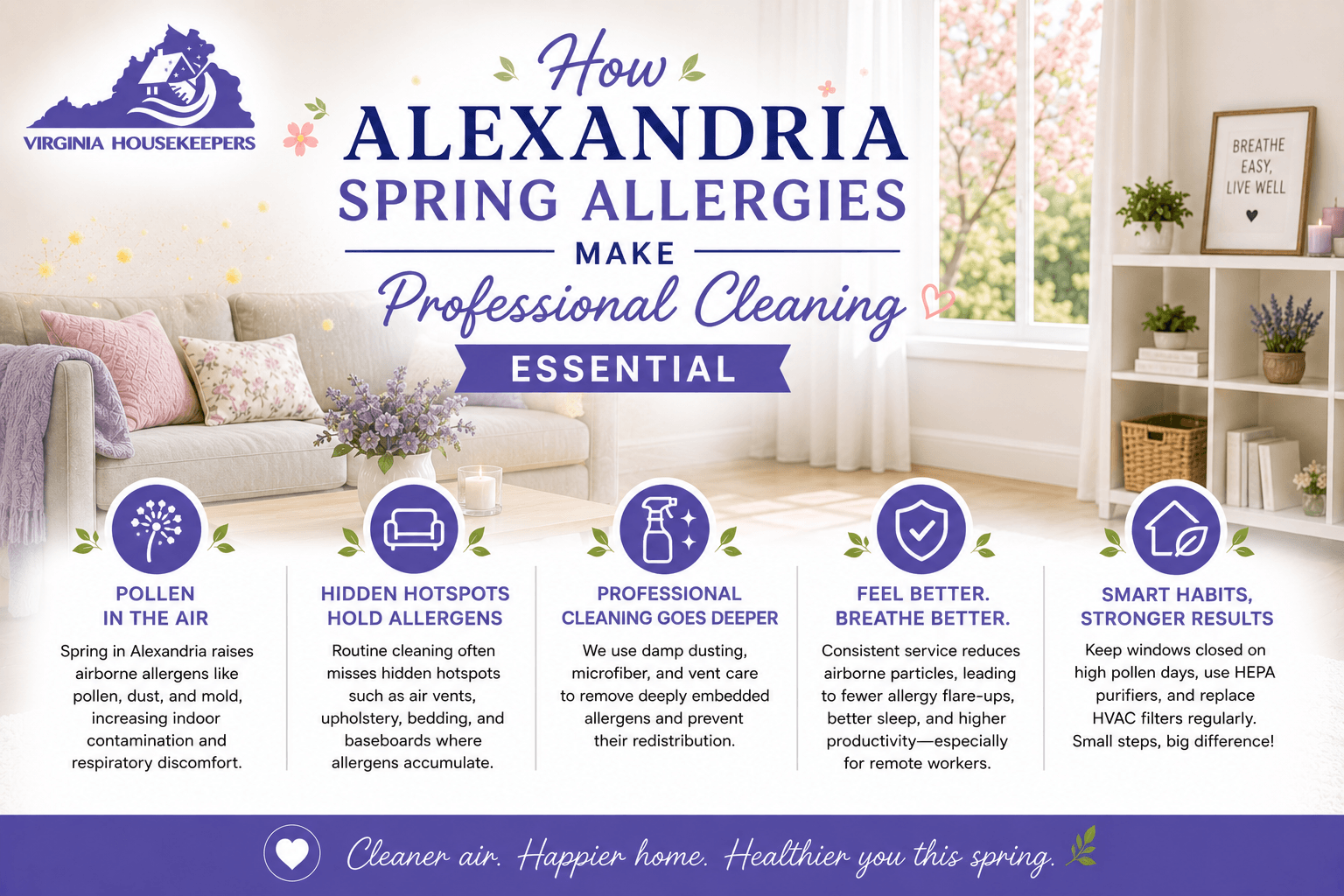
- Spring in Alexandria raises airborne allergens like pollen, dust, and mold, increasing indoor contamination and respiratory discomfort.
- Routine cleaning often misses hidden hotspots such as air vents, upholstery, bedding, and baseboards where allergens accumulate.
- Professional cleaning uses damp dusting, microfiber, and vent care to remove deeply embedded allergens and prevent redistribution.
- Consistent service reduces airborne particles, leading to fewer allergy flare-ups, better breathing, improved sleep, and higher productivity for remote workers.
- Combine recurring cleanings with practical habits: keep windows closed on high pollen days, use HEPA purifiers, and replace HVAC filters regularly.
Anyone who parks on the street in Old Town or Del Ray in April knows the yellow film that coats every car. That same pollen ends up inside your home, on window sills, floors, bedding, and pets. You cannot stop the season, but you can make your house a place where pollen does not pile up.
This guide covers when pollen season runs in the Alexandria area, how pollen gets inside, and a practical room-by-room cleaning plan to keep it under control. It is about cleaning, not medical treatment. If you or someone in your home has significant allergy or asthma symptoms, talk with an allergist.
When Is Pollen Season in Alexandria?
In the Washington, DC, Northern Virginia, and Maryland area, trees typically begin releasing pollen at the end of February, peak in mid to late April, and continue through late May and sometimes into early June. Oak, maple, birch, sycamore, and pine are among the common culprits. Grass pollen overlaps with the tail end of tree season and carries into early summer, and ragweed takes over in late summer and fall.
For cleaning purposes, that means two things. Start your spring routine before the trees bloom, not after you are already sneezing. And plan to keep it up through May, because the heaviest weeks come later than most people expect.
How Pollen Gets Into Your Home
- Shoes and clothing. Pollen rides in on soles, jackets, and bags.
- Hair and skin. A day outside leaves pollen in your hair that ends up on your pillow.
- Pets. Dogs and outdoor cats carry it in their coats and on their paws.
- Open windows and doors. A breezy spring afternoon can undo a morning of cleaning.
- Your HVAC system. Air returns pull in pollen and recirculate it if the filter cannot catch it.
The Entry: Stop It at the Door
- Use two mats: a coarse one outside and an absorbent one inside.
- Make the entry a shoes-off zone during pollen season, with a tray and a bench if you have room.
- Hang outdoor jackets by the door instead of carrying them to bedrooms.
- Wipe dogs’ paws and coats with a damp cloth after walks. Our pet-friendly cleaning guide has more on keeping pet hair and dander down.
- Mop the entry floor a few times a week in April, not just once.
Air and HVAC
- Upgrade the filter if your system allows it. The EPA suggests using a MERV 13 filter or the highest rating your system can accommodate. Check with your HVAC technician before going higher than what your system was designed for.
- Change it more often in spring. A filter that lasts three months in winter may load up faster during peak pollen weeks.
- Vacuum vent covers and returns. Dust and pollen collect on the grilles and blow back out.
- Keep windows closed on high-pollen days. Check the daily pollen forecast and air out the house on low-count days instead.
Dusting: Capture Pollen Instead of Moving It
Feather dusters and dry cloths push pollen into the air, where it settles again an hour later. Use a slightly damp microfiber cloth, and work from the top of the room down: ceiling fans and light fixtures first, then shelves and furniture, then baseboards. Our guide on how to get rid of dust covers technique and tools.
Give extra attention to window sills and tracks, where pollen collects in a visible yellow line every time a window is opened. See how to clean window sills and tracks for a simple method.
Floors and Rugs
- Vacuum with a machine that has a HEPA filter and a sealed bag or bin, so fine particles stay in the vacuum.
- Go slowly. Several slow passes pick up far more than one fast one.
- Vacuum rugs and carpets at least weekly in spring, and the entry and family room more often.
- Follow vacuuming on hard floors with a damp mop to catch what the vacuum blows around. Our guide to cleaning hardwood floors explains how to do that without damaging the finish.
Bedrooms: Protect the Room Where You Spend Eight Hours
- Wash bedding weekly in hot water. The Asthma and Allergy Foundation of America recommends washing sheets, blankets, and pillowcases weekly in water that is at least 130°F to kill dust mites, which often aggravate the same people pollen bothers.
- Shower or at least change clothes before bed on days you spent outside.
- Keep pets off the bed during peak weeks if pollen is a problem for you.
- Wash pillows and refresh the mattress at the start of the season. See how to wash pillows and how to clean a mattress.
Upholstery and Window Treatments
Sofas, curtains, and fabric blinds hold pollen the same way carpet does. Vacuum upholstery with the brush attachment weekly in spring, wash curtains or have them cleaned at the start of the season, and wipe hard blinds with a damp cloth. Our guide to cleaning the living room covers fabric care in more detail.
A Weekly Routine for Peak Pollen Season
- Daily: shoes off at the door, wipe pets after walks, keep windows closed on high-count days.
- Twice a week: mop the entry and kitchen, vacuum the family room and any rugs near doors.
- Weekly: damp-dust every room top to bottom, vacuum all floors and upholstery, wash bedding in hot water.
- Monthly in spring: check and change the HVAC filter, clean window sills and tracks, vacuum vents and returns.
Where Professional Cleaning Helps
The hard part of allergy-season cleaning is not knowing what to do. It is keeping it up every week from March through May. That is where regular recurring cleaning helps: the dusting, vacuuming, and mopping happen on a schedule whether or not your week cooperates, and recurring clients keep the same team, so they learn your home. If the house needs a full reset before the season starts, a one-time deep cleaning in late winter covers baseboards, vents, sills, and the other places pollen and dust settle.
Virginia Housekeepers’ housekeepers are bonded, insured, and background-checked employees, and we stand behind every visit with a 100% satisfaction guarantee. Learn more about our house cleaning services in Alexandria, or request a free written estimate. Prefer to talk it through? Call (703) 858-2266.
Share this article
Related Posts













Follow us
A quick overview of the topics covered in this article.